

What it is: Aviilx_long™ is a nine-ingredient post-viral recovery formula from Panaxea International, combining standardized botanicals and L-Tryptophan to address the multi-system burden of post-viral syndrome — cardiovascular, neurological, pulmonary, and psychiatric. Key standardizations include Artemisinin, Baicalein, Icariin, and Tenuigenin. Manufactured to Australian Pharmaceutical GMP standards for exclusive practitioner-directed use.
How it works: Each ingredient targets a distinct dimension of post-viral pathology. Artemisinin suppresses NF-κB and STAT3 inflammatory signaling and inhibits viral replication. Baicalein blocks viral 3CL protease and helicase while suppressing NLRP3 inflammasome activation. Angelica keiskei chalcones address microclotting, vascular endothelial injury, and systemic inflammation. Luteolin stabilizes mast cells and suppresses neuroinflammation. Saffron supports serotonergic and dopaminergic mood recovery and neuroprotection. Polygala tenuifolia upregulates BDNF and modulates the HPA axis. Gardenia jasminoidin crosses the blood-brain barrier to reduce microglial neuroinflammation. Glycyrrhizin provides direct antiviral activity and adrenal cortisol support. L-Tryptophan restores serotonin and melatonin biosynthesis disrupted by viral neurological involvement.
When to use it: Indicated for adult clients with post-viral multi-system symptoms — cognitive fog, fatigue, cardiovascular inflammatory burden, mood disturbance, neurological symptoms, and immune dysregulation. One capsule twice daily with food. Contraindicated with concurrent SSRIs or SNRIs without oversight, during pregnancy, and in clients with hypertension.
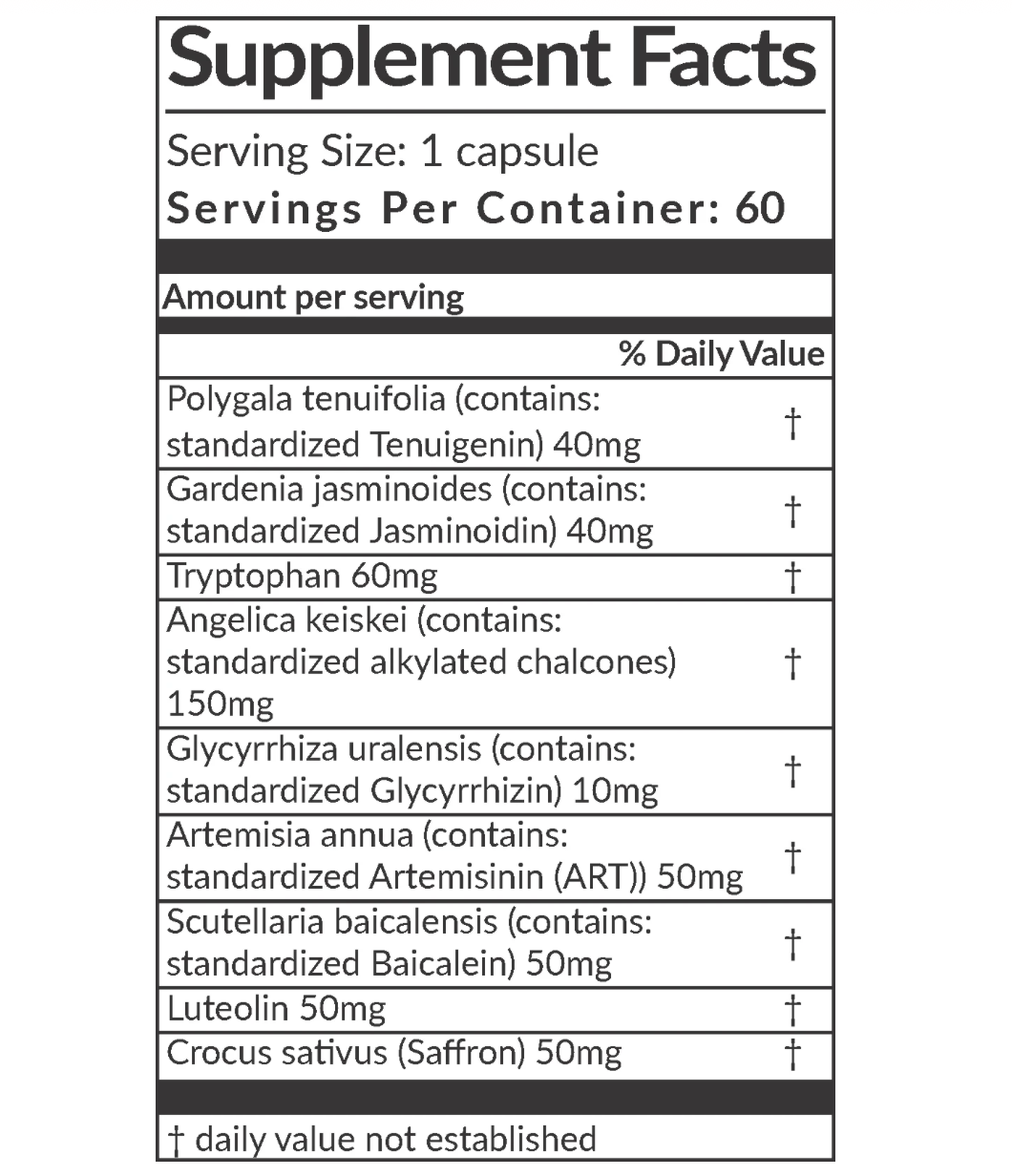
Serving Size: 1 Capsule
Servings Per Container: 60
Suggested Use: As a dietary supplement, take 1 capsule twice daily, or as prescribed by your healthcare practitioner.
|
Ingredient |
Amount Per Serving |
% Daily Value |
|
Polygala tenuifolia (contains: standardized Tenuigenin) |
40 mg |
† |
|
Gardenia jasminoides (contains: standardized Jasminoidin) |
40 mg |
† |
|
L-Tryptophan |
60 mg |
† |
|
Angelica keiskei (contains: standardized alkylated chalcones) |
150 mg |
† |
|
Glycyrrhiza uralensis (contains: standardized Glycyrrhizin) |
10 mg |
† |
|
Artemisia annua (contains: standardized Artemisinin [ART]) |
50 mg |
† |
|
Scutellaria baicalensis (contains: standardized Baicalein) |
50 mg |
† |
|
Luteolin |
50 mg |
† |
|
Crocus sativus (Saffron) |
50 mg |
† |
† Daily Value not established.
Other Ingredients: Vegetable cellulose (hypromellose), vegetable stearic acid, microcrystalline cellulose, vegetable magnesium stearate.
Does Not Contain: Wheat, gluten, soy, milk, eggs, fish, crustacean shellfish, tree nuts, peanuts.
Caution: Contraindicated during pregnancy — L-Tryptophan in amounts greater than found in foods may be unsafe during pregnancy. Not recommended while breast-feeding. Do not use concurrently with SSRIs or SNRIs without practitioner supervision. Use with caution in clients with hypertension. If taking medications or have a medical condition, consult your healthcare practitioner before use. Do not use if you have known hypersensitivity to any of the ingredients. Do not use if tamper-evident seal is broken or missing. Keep out of reach of children. Store in a cool, dry place away from sunlight.
✓ Vegetarian ✓ Gluten Free ✓ Dairy Free ✓ Soy Free ✓ Egg Free ✓ Nut Free ✓ Australian Pharmaceutical GMP Manufactured
Key Ingredients
Angelica keiskei (standardized to Alkylated Chalcones) — 150 mg Angelica keiskei is standardized to its primary prenylated chalcones — 4-hydroxyderricin and xanthoangelol — the most pharmacologically active constituents of this botanical. These chalcones inhibit NF-κB-driven cytokine production, suppress platelet aggregation, and exert direct antiviral activity against replication enzymes. At the formula's highest dose, they provide the broadest-spectrum coverage of the vascular endothelial injury and microclotting that drive post-viral cardiovascular sequelae.
Artemisia annua (standardized to Artemisinin) — 50 mg Artemisia annua is standardized to Artemisinin — the sesquiterpene lactone endoperoxide with well-documented antiviral and anti-inflammatory activity across multiple viral pathogens. Artemisinin generates reactive oxygen species in infected cells to disrupt viral replication machinery, while inhibiting NF-κB and STAT3 pro-inflammatory transcription pathways. It addresses the chronic neuroinflammation driving fatigue and cognitive fog in post-viral recovery.
Scutellaria baicalensis (standardized to Baicalein) — 50 mg Scutellaria baicalensis is standardized to Baicalein — the aglycone flavone form of Baicalin, offering superior bioavailability without requiring microbiota-mediated conversion. Baicalein directly inhibits viral 3CL protease and helicase enzymes, providing two-stage blockade of viral replication. It also suppresses NLRP3 inflammasome activation and crosses the blood-brain barrier to reduce microglial neuroinflammation.
Crocus sativus (Saffron) — 50 mg Saffron delivers safranal, crocin, and crocetin — bioactive carotenoids with documented antidepressant activity through monoamine reuptake inhibition across serotonin, dopamine, and norepinephrine transporters. Crocin and crocetin cross the blood-brain barrier to reduce neuroinflammatory cytokine production and support hippocampal BDNF expression. Together they address the depression, anxiety, cognitive impairment, and sleep disruption that characterize post-viral neuropsychiatric involvement.
Luteolin — 50 mg Luteolin is a flavone with documented mast cell-stabilizing, anti-neuroinflammatory, and antiviral activity — particularly relevant to post-viral syndromes where mast cell activation perpetuates multi-system symptom burden. It inhibits IgE-mediated mast cell degranulation and suppresses histamine and cytokine release, addressing cardiovascular, neurological, and gastrointestinal symptom amplification. Luteolin also suppresses NF-κB-driven microglial neuroinflammation and has demonstrated inhibitory activity against viral spike protein–receptor binding in computational and in vitro models.